
Mekke Anlaşması: Üç Devlet Birbirine Neden Güvensin?

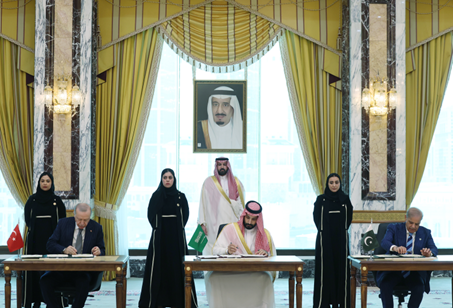
7 Ağustos 2026'da Mekke'de Türkiye, Suudi Arabistan ve Pakistan arasında imzalanan ortak savunma anlaşması, ilk bakışta klasik bir güvenlik paktı gibi görünüyor. Anlaşmanın en dikkat çekici hükmü ise açık: Üç ülkeden herhangi birine yönelik silahlı saldırı, üçüne birden yapılmış kabul edilecek. Riyad, anlaşmanın savunma amaçlı olduğunu, başka ittifakların yerine geçmediğini ve herhangi bir silahlanma yarışını hedeflemediğini özellikle vurguluyor. Fakat bu anlaşmayı anlamanın asıl yolu “Kim kime saldırırsa kim yardım edecek?” sorusu değildir. Asıl soru şudur: Suudi Arabistan neden Türkiye için savaşsın? Türkiye neden Suudi Arabistan için savaşsın? Pakistan neden diğer ikisi için bedel ödesin? Uluslararası ilişkilerin en zor sorularından biri tam da budur. Çünkü devletler dostlukla değil, çıkarla hareket eder. Bir devlet bugün verdiği sözü, yarın çıkarları değiştiğinde bozabilir. Uluslararası sistemde devletleri anlaşmalarına zorlayacak merkezi bir dünya hükümeti bulunmadığı için, her ittifakın temelinde aynı problem vardır. Güvenilir taahhüt problemi. Bir devlet “Sana saldırılırsa yanında olacağım” dediğinde, karşı tarafın aklına hemen şu soru gelir: “Gerçekten mi?” İşte Mekke Anlaşması'nın stratejik anlamı burada başlıyor. Temelde anlaşmanın değeri savaşa girmesinde değil, savaşı önlemesindedir. Bir ittifakın başarısını yalnızca savaş çıktığında kaç asker gönderdiğiyle ölçmek büyük bir stratejik yanılgıdır. İyi bir ittifakın en büyük başarısı, savaş çıkmadan önce karşı tarafı saldırmaktan vazgeçirmesidir. Çünkü saldırgan devlet artık karşısındaki ülkenin askerî kapasitesini tek başına hesaplamaz. Türkiye'ye saldırmak yalnızca Türkiye ile savaşmak anlamına geliyorsa başka bir hesap vardır. Fakat saldırgan, Türkiye'ye yönelik saldırının Suudi Arabistan ve Pakistan'ı da denkleme sokabileceğini düşünüyorsa hesap değişir. Bu, kolektif caydırıcılık mantığıdır. Bir saldırının maliyetini yükseltmek. Dolayısıyla Mekke Anlaşması'nın gerçek stratejik ürünü savaş değil, savaş ihtimalidir. Daha doğrusu, saldırganın zihninde oluşturduğu belirsizliktir: “Acaba Türkiye'ye saldırırsam Pakistan ne yapacak?” “Suudi Arabistan'a saldırırsam Türkiye ne kadar ileri gidecek?” Caydırıcılık tam olarak bu psikolojik hesap üzerine kuruludur. Fakat burada ikinci problem ortaya çıkıyor. Bir anlaşma imzalamak, onu güvenilir hale getirmez. Devletler bunu çok iyi bilir. Bu nedenle ittifakların tarihinde sadece anlaşma metinleri değil, taahhüdü maliyetli hale getiren mekanizmalar önemlidir. Ortak tatbikatlar, ortak askerî planlama, istihbarat paylaşımı, savunma sanayii işbirliği, askerî personel değişimi, ortak komuta mekanizmaları ve önceden belirlenmiş müdahale prosedürleri bunun için vardır. Çünkü bir devletin verdiği söz ne kadar çok kurumsal mekanizmayla desteklenirse, o sözü sonradan bozmanın maliyeti de o kadar yükselir. Buna stratejik literatürde credible commitment, yani “güvenilir taahhüt” problemi üzerinden bakabiliriz. Devlet bugün kendisini yarının davranışına bağlar. Bu aslında bir tür önceden bağlanma stratejisidir. “Yarın şartlar değişse bile bu ittifakın gereklerini yerine getireceğim” mesajı verilir. Ancak bunun gerçekten işe yaraması için sadece siyasi irade değil, maliyetli karşılıklı bağımlılık gerekir. Suudi Arabistan neden Türkiye'ye ihtiyaç duysun? Burada anlaşmanın üç ülkeye farklı şeyler sunduğunu görmek gerekiyor. Suudi Arabistan büyük finansal kaynaklara, enerji gücüne ve stratejik coğrafyaya sahip. Türkiye gelişmiş ve giderek çeşitlenen bir savunma sanayii kapasitesine, büyük bir askerî altyapıya ve NATO üyeliğinden kaynaklanan stratejik deneyime sahip. Pakistan ise büyük ve tecrübeli bir silahlı kuvvetler yapısına ve nükleer caydırıcılığa sahip. Dolayısıyla bu üç ülke aynı şeyi birbirine vermiyor. Tam tersine, farklı güç unsurlarını birbirine bağlıyorlar. Bu nedenle anlaşmayı: Suudi finansmanı + Türk savunma teknolojisi + Pakistan askerî kapasitesi şeklindeki bir stratejik tamamlayıcılık üzerinden okumak mümkündür. Burada ortaya çıkan şey yalnızca askerî dayanışma değil, güvenlik kapasitesinin paylaşılmasıdır. Suudi Arabistan'ın hesabı Türkiye için savaşmak olmayabilir. İşte anlaşmanın en kritik stratejik noktası budur. Riyad'ın hesabı: “Türkiye için savaşacağım.” olmayabilir. Daha rasyonel hesap şudur: “Türkiye'nin benim güvenliğimin parçası haline gelmesi, bana yönelik saldırının maliyetini yükseltir.” Aynı şey Türkiye için de geçerlidir. Ankara'nın amacı Suudi Arabistan'ın bütün savaşlarına girmek değil, Türkiye'ye yönelik bir saldırının yalnızca Türkiye'nin problemi olmadığını göstermektir. Bu nedenle ittifakları sadece “kim kimin için savaşacak?” sorusuyla okumak yetersizdir. Daha doğru soru: “Kim, kimin güvenlik hesabını değiştirebiliyor?” olmalıdır. Fakat ittifakların bir de karanlık yüzü vardır. Her ittifak iki korku yaratır. Birincisi abandonment, yani müttefik tarafından terk edilme korkusudur. “Ben saldırıya uğradığımda müttefikim beni yalnız bırakır mı?” İkincisi ise entrapment, yani müttefik tarafından savaşa sürüklenme korkusudur. “Benim istemediğim bir savaşa müttefikim yüzünden girmek zorunda kalır mıyım?” Mekke Anlaşması'nın gelecekteki başarısını belirleyecek en önemli meselelerden biri de budur. Örneğin Türkiye, Suudi Arabistan'ın dahil olduğu bir bölgesel çatışmanın otomatik biçimde tarafı olmak istemeyebilir. Suudi Arabistan da Türkiye'nin başka bir cephede yaşayacağı kriz nedeniyle savaşa sürüklenmek istemeyebilir. Pakistan açısından da aynı problem geçerlidir. Dolayısıyla anlaşmanın gerçek gücü, “saldırı herkese saldırıdır” cümlesinden çok, bu cümlenin hangi şartlarda ve nasıl uygulanacağının kurumsallaştırılmasına bağlıdır. NATO'nun tarihi burada önemli bir ders veriyor. NATO'nun 1949'da kurulması da yalnızca bir kâğıt üzerinde “birimiz hepimiz için” denilmesinden ibaret değildi. İttifakı güçlü yapan şey zaman içinde oluşan askerî planlama, ortak tatbikatlar, üsler, komuta yapıları, istihbarat paylaşımı ve ekonomik-siyasi bütünleşmeydi. Dolayısıyla NATO'nun gerçek gücü 5. maddeyi yazmış olması kadar, 5. maddenin arkasında onlarca yıl boyunca oluşturulan kurumsal kapasitenin bulunmasından kaynaklandı. Mekke Anlaşması açısından da tarihsel ders aynıdır: Bir ittifakın kâğıt üzerindeki gücü ile gerçek hayattaki gücü aynı şey değildir. Bugün imzalanan anlaşma bir güvenlik mimarisinin başlangıcı olabilir. Fakat bunun gerçekten güçlü bir ittifaka dönüşüp dönüşmeyeceğini bundan sonraki yıllar gösterecektir. Asıl mesele karşılıklı bağımlılık yaratmaktır. Devletlerin birbirlerine sadakatini artırmanın en güçlü yollarından biri, onları birbirine bağımlı hale getirmektir. Savunma sanayii projeleri ortaklaşır. İstihbarat sistemleri birbirine bağlanır. Ortak tatbikatlar yapılır. Askerî planlama ortaklaşır. Ticaret büyür. Enerji ilişkileri derinleşir. Teknoloji transferleri gerçekleşir. Bir süre sonra ittifaktan ayrılmanın maliyeti, ittifak içinde kalmanın maliyetinden daha yüksek hale gelir. İşte o zaman anlaşma sadece bir diplomatik belge olmaktan çıkar. Stratejik bir bağımlılık sistemine dönüşür. Bu nedenle Mekke Anlaşması'nı yalnızca bir “İslam dünyası savunma paktı” olarak okumak eksik olacaktır. Daha geniş anlamıyla bu, üç farklı güç merkezinin kendi güvenliklerini birbirine bağlama girişimidir. Bu yeni bir doktrinin başlangıcı mı? Buradan daha teorik bir kavrama ulaşabiliriz: Karşılıklı Güvenlik Bağımlılığı Doktrini… Bu doktrinin temel mantığı basit: Tek başına güvenlik üretmek yerine, güvenliği ortaklaştır. Bir devletin güvenliğini diğer iki devletin güvenliğiyle bağla. Böylece herhangi bir saldırgan için hedefin maliyetini yükselt. Bu sistem üç temel üzerine kurulabilir: Caydırıcılık: Saldırının maliyetini yükselt. Taahhüt: Müttefiklerin geri adım atmasını zorlaştır. Karşılıklı bağımlılık: İttifaktan çıkmanın maliyetini yükselt. Bu üçü bir araya geldiğinde ortaya klasik askerî ittifaktan daha karmaşık bir yapı çıkar. Çünkü artık mesele sadece: “Sen bana saldırırsan ben seni vururum.” değildir. Mesele: “Bana saldırdığında karşıma üç ülkenin kapasitesini çıkarırım.” mesajıdır. Bu nedenle Mekke Anlaşması'nın önemini “üç ülke savaş çıkarsa birbirine yardım edecek” cümlesine indirgemek yanlış olur. Asıl mesele, üç devletin birbirlerinin güvenlik hesabına dâhil olmasıdır. Ancak burada romantik bir “kardeşlik ittifakı” anlatısından da kaçınmak gerekir. Devletler kardeşlikten önce çıkarlarını hesaplar. Suudi Arabistan Türkiye'ye, Türkiye Pakistan'a, Pakistan Suudi Arabistan'a yalnızca “dost oldukları” için güvenmeyecek. Güvenliklerini birbirine bağladıkları için güvenmek zorunda kalacaklar. İşte gerçek ittifak budur. Devletleri birbirine bağlayan şey iyi niyet değil, karşılıklı maliyettir. Bu yüzden Mekke Anlaşması'nın geleceğini belirleyecek soru bugün “Anlaşmayı imzaladılar mı?” değildir. Asıl soru şudur: Bu üç ülke, birbirlerinin güvenliğini gerçekten kendi güvenlikleri haline getirecek kadar birbirlerine bağlanabilecek mi? Eğer cevap evetse, Mekke'de imzalanan belge bir diplomatik fotoğraf olmaktan çıkar ve yeni bir bölgesel güvenlik mimarisinin başlangıcına dönüşür. Eğer cevap hayırsa, anlaşma kâğıt üzerinde kalır. Çünkü uluslararası siyasette bir anlaşmanın gerçek gücü, imzalandığı gün değil, kriz çıktığı gün ortaya çıkar. Ve belki de Mekke Anlaşması'nın asıl sınavı tam da o gün başlayacaktır.
The Mecca Agreement: Why Should the Three States Trust Each Other?
The joint defense agreement signed in Mecca on August 7, 2026, between Turkey, Saudi Arabia, and Pakistan, at first glance appears to be a classic security pact. The most striking provision of the agreement is clear: an armed attack against any one of the three countries will be considered an attack against all three. Riyadh specifically emphasizes that the agreement is defensive, does not replace other alliances, and does not aim at any arms race. However, the real way to understand this agreement is not by asking, "Who will help whom if they attack?" The real question is: Why should Saudi Arabia fight for Turkey? Why should Turkey fight for Saudi Arabia? Why should Pakistan pay the price for the other two? This is precisely one of the most difficult questions in international relations. Because states act not out of friendship, but out of self-interest. A state can break a promise it made today when its interests change tomorrow. Since there is no central world government to force states to abide by agreements in the international system, the same problem underlies every alliance: the problem of reliable commitment. When one state says, "If you are attacked, I will stand by you," the other side immediately asks, "Really?" This is where the strategic significance of the Mecca Agreement begins. Fundamentally, the value of the agreement lies not in engaging in war, but in preventing it. Measuring the success of an alliance solely by the number of troops it sends when war breaks out is a major strategic fallacy. The greatest success of a good alliance is deterring the other side from attacking before war even starts. Because the aggressor state no longer calculates the military capacity of the opposing country alone. If attacking Türkiye means only waging war against Turkey, then there is a different calculation. But if the aggressor believes that an attack on Türkiye could also bring Saudi Arabia and Pakistan into the equation, then the calculation changes. This is the logic of collective deterrence. Increasing the cost of an attack. Therefore, the real strategic product of the Mecca Agreement is not war, but the possibility of war. Or rather, it is the uncertainty it creates in the aggressor's mind: "What will Pakistan do if I attack Türkiye?" "How far will Turkey go if I attack Saudi Arabia?" Deterrence is built precisely on this psychological calculation. But here a second problem arises. Signing an agreement does not make it reliable. States know this very well. Therefore, in the history of alliances, not only the text of the agreements but also the mechanisms that make commitment costly are important. Joint exercises, joint military planning, intelligence sharing, defense industry cooperation, military personnel exchange, joint command mechanisms, and predetermined intervention procedures exist for this purpose. Because the more institutional mechanisms a state supports with its promise, the higher the cost of breaking that promise later. We can look at this through the problem of credible commitment in strategic literature. A state binds itself today to the behavior of tomorrow. This is actually a kind of pre-commitment strategy. The message given is, "Even if the conditions change tomorrow, I will fulfill the requirements of this alliance." However, for this to really work, it requires not only political will but also costly interdependence. Why would Saudi Arabia need Türkiye? Here, it is necessary to see that the agreement offers different things to the three countries. Saudi Arabia has large financial resources, energy power, and a strategic geography. Turkey has a developed and increasingly diversified defense industry capacity, a large military infrastructure, and strategic experience stemming from its NATO membership. Pakistan, on the other hand, has a large and experienced armed forces structure and nuclear deterrence. Therefore, these three countries are not giving each other the same thing. On the contrary, they are linking different elements of power. Thus, the agreement can be interpreted as a strategic complementarity: Saudi financing + Turkish defense technology + Pakistani military capacity. What emerges here is not just military solidarity, but the sharing of security capacity. Saudi Arabia's calculation may not be to fight for Turkey. This is the most critical strategic point of the agreement. Riyadh's calculation may not be: "I will fight for Turkey." A more rational calculation is: "Türkiye becoming part of my security increases the cost of an attack against me." The same applies to Turkey. Ankara's aim is not to get involved in all of Saudi Arabia's wars, but to show that an attack on Türkiye is not only Türkiye's problem. Therefore, it is insufficient to interpret alliances only with the question of "who will fight for whom?". A more accurate question should be: "Who can change whose security calculations?" But alliances also have a dark side. Every alliance creates two fears. The first is the fear of abandonment, that is, being left alone by an ally. "If I am attacked, will my ally leave me alone?" The second is entrapment, that is, the allied side. The fear is being dragged into war. “Will I be forced into a war I don’t want because of my ally?” This is one of the most important issues that will determine the future success of the Mecca Agreement. For example, Turkey may not want to automatically become a party to a regional conflict involving Saudi Arabia. Similarly, Saudi Arabia may not want to be dragged into a war because of a crisis Türkiye might face on another front. The same problem applies to Pakistan. Therefore, the real strength of the agreement depends less on the phrase “an attack is an attack on all” and more on the institutionalization of how and under what conditions this phrase will be applied. NATO’s history provides an important lesson here. The establishment of NATO in 1949 was not merely a matter of saying “one for all” on paper. What made the alliance strong was the military planning, joint exercises, bases, command structures, intelligence sharing, and economic and political integration that developed over time. Therefore, NATO’s real strength stemmed not only from having written Article 5, but also from the institutional capacity built over decades behind Article 5. The historical lesson regarding the Mecca Agreement is the same: the power of an alliance on paper is not the same as its power in real life. The agreement signed today may be the beginning of a security architecture. But whether it will truly develop into a powerful alliance will be shown in the coming years. The real issue is creating interdependence. One of the most powerful ways to increase the loyalty of states to each other is to make them interdependent. Defense industry projects are shared. Intelligence systems are interconnected. Joint exercises are conducted. Military planning is shared. Trade grows. Energy relations deepen. Technology transfers take place. After a while, the cost of leaving the alliance becomes higher than the cost of remaining in it. That's when the agreement ceases to be merely a diplomatic document. It transforms into a strategic system of interdependence. Therefore, reading the Mecca Agreement only as an "Islamic world defense pact" would be incomplete. In a broader sense, this is an attempt by three different power centers to link their security to each other. Is this the beginning of a new doctrine? From here, we can arrive at a more theoretical concept: the Doctrine of Interdependence on Security. The basic logic of this doctrine is simple: instead of generating security alone, share security. Link the security of one state to the security of two other states. This increases the cost of the target for any aggressor. This system can be built on three pillars: Deterrence: Increases the cost of attack. Commitment: Makes it difficult for allies to back down. Interdependence: Increases the cost of leaving the alliance. When these three come together, a more complex structure emerges than a classic military alliance. Because the issue is no longer simply: "If you attack me, I will strike you." The issue is: "If you attack me, I will bring out the capabilities of three countries against me." Therefore, it would be wrong to reduce the importance of the Mecca Agreement to the sentence "three countries will help each other if war breaks out." The real issue is the inclusion of three states in each other's security calculations. However, it is also necessary to avoid a romanticized narrative of a "brotherhood alliance" here. States calculate their interests before brotherhood. Saudi Arabia will not trust Türkiye, Turkey will not trust Pakistan, and Pakistan will not trust Saudi Arabia simply because they are “friends.” They will have to trust each other because they have linked their security. That is what a true alliance is. What binds states together is not goodwill, but mutual cost. Therefore, the question that will determine the future of the Mecca Agreement today is not “Did they sign the agreement?” The real question is: Can these three countries truly become so interconnected that they make each other’s security their own? If the answer is yes, the document signed in Mecca will cease to be a diplomatic photograph and will become the beginning of a new regional security architecture. If the answer is no, the agreement will remain on paper. Because in international politics, the true power of an agreement is revealed not on the day it is signed, but on the day a crisis erupts. And perhaps the real test of the Mecca Agreement will begin precisely on that day.

Yazarın Diğer Yazıları
- Rusya Almanya'yı Vuracak mı? Belarus'tan Berline'e Bir Savaş Senaryosu
- Türkiye Ebu Zuhur’a mı, yoksa başka bir noktaya mı üs kuracak?
- Türkiye sınır ötesi harekata mı hazırlanıyor?
- Bir Hareket Ne Zaman Suç Üreten Bir Yapıya Dönüşür?
- 2026 Ortadoğu’sunda aslan kim geyik kim?
- Ortadoğu’daki bu görünmez el kimin?
- Toplumsal Çevreleme Doktrini: İspanya
- Türkiye-Irak Yakınlaşması ve Değişen Ortadoğu Jeopolitiği