
The War Extending to Riyadh: Iran’s Regional Strategy, Saudi Arabia’s Defense Dilemma, and the Future of Oil

More than an airport attack: Power struggle, energy security, and strategic attrition in the Gulf
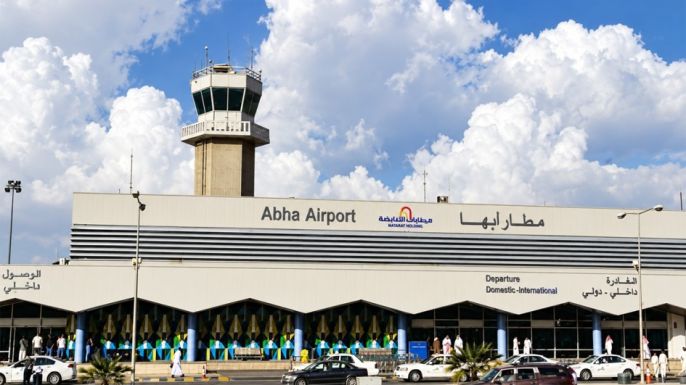
The attack on King Khalid International Airport in Riyadh, Saudi Arabia, on October 10, 2026, clearly demonstrated that Gulf security can no longer be measured solely through oil facilities and military bases. According to Reuters and the Associated Press, at least 12 people were killed and 309 injured in the attack. The fact that the airport had been targeted twice earlier that same week necessitates that the incident be considered part of a broader conflict rather than an isolated attack. The background to the attack includes the renewed escalation of the war in Yemen, the regional implications of the US-Israeli war against Iran, and Saudi Arabia's security architecture. However, the real question is broader than the launch location of the missiles: What strategic outcome did these attacks aim to produce, and how might they alter the balance of power in the Gulf? Airports are not merely civilian transportation infrastructure; they are points of intersection for international capital, diplomatic contacts, tourism, and trade. Targeting the airport at a time when Riyadh was hosting international investment and energy meetings could have economic and psychological consequences beyond physical damage. A Reuters report from October 10 stated that flights from Riyadh were diverted to other airports following the attack, and airport operations were temporarily suspended. The Houthis warned international airlines to avoid Saudi airspace. Thus, the impact of the attack was not limited to the targeted facility; it also put pressure on the country's claim to be an international transportation hub. In this context: Defeating a country's entire military capacity is not the only way to subdue it. Constantly threatening its critical infrastructure, altering investor risk perception, and increasing security spending can also narrow the opponent's room for maneuver.
Therefore, the airport attack should be considered not only as a military action, but also as an indirect form of pressure on the state's economic and political capacity. But why now? To understand the timing of the attacks, we need to look at developments in Yemen. According to a Reuters report dated October 10th, the ceasefire established in 2022 dissolved in the summer of 2026. The Houthi advance shifted the balance of control over the strategic Bab al-Mandeb crossing. Forces loyal to the Saudi-backed Yemeni government launched a new ground offensive to retake lost territories. The Houthis responded by intensifying their attacks targeting Saudi Arabia, expanding the geographical scope of the conflict. These developments coincide with the regional impact of the war launched by the US and Israel against Iran in February 2026. Reuters reports the Houthi attacks as part of a regional escalation linked to the war with Iran. Therefore, when explaining the attacks on Riyadh, it is necessary to distinguish between two levels. The first level is the Houthis' military and political objectives in Yemen. The second level is the potential for these attacks to increase pressure on Iran's regional rivals. The Houthis certainly have their own decision-making mechanisms. Their relationship with Iran doesn't prove that every operation was directly planned or ordered by Tehran. However, Iran's long-standing political and military relationship with the Houthis makes it impossible to consider this conflict independently from the regional power struggle. The fundamental issue is not whether Iran directly orchestrated every attack, but rather the impact of the resulting security crisis on Iran's regional rivals and the military resources of the United States. Indeed, Iran's centuries-old strategy is not to defeat its rivals, but to increase their costs. So why was Saudi Arabia's air defense strained? An attack on the airport of a strategically important capital like Riyadh raises significant questions about Saudi Arabia's air defense capabilities. However, a technical distinction needs to be made here: an attack reaching its target does not mean that the defense systems are entirely ineffective. The success of air defense depends on... The effectiveness of an attack depends on the scale of the attack, the characteristics of the ammunition used, the early warning time, radar coverage, interceptor stockpiles, and the coordination of different systems. Launching multiple missiles and drones in short intervals can create intense pressure on defense systems. Furthermore, there can be significant differences between the cost of the ammunition used by the attacking side and the cost of the interceptor missiles used to stop it. An Associated Press report on October 10th highlighted the pressure on Saudi Arabia's interceptor missile stockpiles and its request for air defense support from allies. This information shows that the problem has not only technical but also logistical and economic dimensions. Saudi Arabia has to simultaneously protect airports, oil facilities, military bases, cities, and energy pipelines, while also allocating resources to defending its own territory while conducting military operations in Yemen. This picture reveals one of the fundamental asymmetries of modern warfare: the attacking side may not need to hit all targets; even constantly putting the defending side on alert and forcing them to heavily utilize expensive defense systems can yield results. Therefore, what the attacks in Riyadh showed is not that Saudi air defenses have completely collapsed, but rather how intense and repeated attacks can significantly increase the cost of protecting critical infrastructure. So, in light of all this data, what is the state of Saudi oil? Oil is, of course, at the heart of Saudi Arabia's regional weight. However, the strategic importance of oil doesn't stem solely from the quantity of reserves. Production capacity, low-cost production, export infrastructure, and its role in global markets are also components of this power. According to Saudi Aramco's 2025 data, the company's proven crude oil and condensate reserves were approximately 186.5 billion barrels as of December 31, 2025. The company's total proven hydrocarbon reserves, when oil, natural gas, and other liquid hydrocarbons are considered together, reached approximately 247.2 billion barrels of oil equivalent. Aramco's total liquid hydrocarbon production for 2025 was announced as an average of 10.7 million barrels per day.
It's not accurate to definitively say how many years it will take for oil to run out by simply dividing these figures. This is because total liquid production isn't entirely crude oil, and production volumes can fluctuate over time. However, current reserves and production levels suggest that Saudi Arabia's oil could maintain its economic importance for decades to come. The real risk isn't the imminent depletion of oil, but rather the ability to securely sustain production and export. Damage to oil processing plants, pipelines, and export terminals makes it difficult to convert underground reserves into economic revenue, no matter how large. Attacks on airports can damage transportation and investment perceptions, while attacks on energy infrastructure can directly impact production and export capacity. Saudi Arabia's experience with the 2019 attacks on the Abqaiq and Khurais oil facilities already highlighted the strategic importance of energy infrastructure. The recent attacks on Riyadh serve as a reminder that securing critical infrastructure isn't just about protecting oil facilities. Furthermore, the acceleration of the global energy transition, the proliferation of electric vehicles, and investments in alternative energy sources are increasing uncertainties about the future of oil demand. Saudi Arabia's efforts to diversify into tourism, technology, finance, logistics, and industry are also linked to this long-term risk. Therefore, the country's strategic calculations proceed along two distinct time horizons: securing oil production and exports in the short term; and reducing dependence on oil revenues in the long term. War and security crises can make achieving both goals simultaneously difficult. Increased defense spending and threats to energy infrastructure can put pressure on resources that could be used for economic diversification. Consequently, the struggle in the Gulf cannot be measured solely by missile range, military capacity, or underground oil reserves. The real struggle is about who can impose greater costs on their rival and how well they can maintain their own strategic resilience. Iran's regional influence, Saudi Arabia's economic power, and the US's military superiority offer different advantages in this equation; however, no power has absolute security when its critical infrastructure is constantly under threat. Because in geopolitics, true power is not the quantity of oil you possess, but your ability to extract, transport, and transform that oil into political influence. And sometimes a nation's greatest vulnerability lies in where its greatest wealth is located.

Yazarın Diğer Yazıları
- Aliyev Sonrası Azerbaycan’ın Siyasi Provası: Siyasal İslam mı?
- Riyad’a Uzanan Savaş: İran’ın Bölgesel Stratejisi, Suudi Arabistan’ın Savunma Açmazı ve Petrolün Geleceği
- Rusya Almanya'yı Vuracak mı? Belarus'tan Berline'e Bir Savaş Senaryosu
- Türkiye Ebu Zuhur’a mı, yoksa başka bir noktaya mı üs kuracak?
- Türkiye sınır ötesi harekata mı hazırlanıyor?
- Bir Hareket Ne Zaman Suç Üreten Bir Yapıya Dönüşür?
- 2026 Ortadoğu’sunda aslan kim geyik kim?
- Ortadoğu’daki bu görünmez el kimin?