
The Struggle for Power in Brazil: Historical Power Structures, Political Polarization, and Global Competition

From military regime to the 2026 elections: The transformation of state, society and international power balances in Brazil.
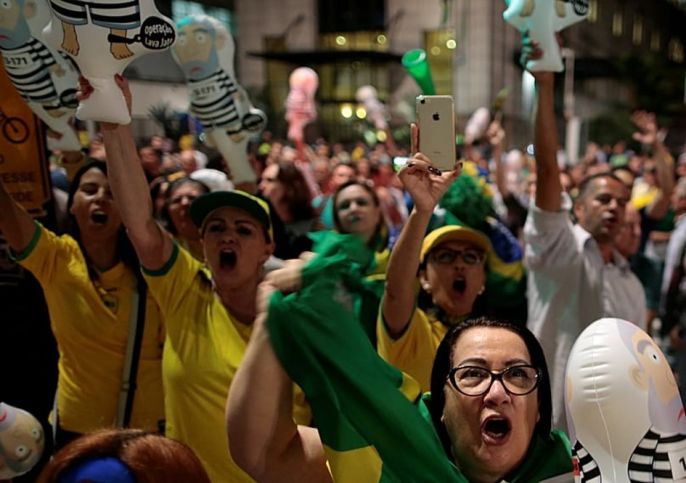
The second round of the Brazilian presidential election, scheduled for October 25, 2026, raises not only the possibility of a change of power but also a broader debate about the political and geopolitical future of Latin America. While the rivalry between Lula da Silva and Flávio Bolsonaro initially appears to be a traditional struggle between right and left-wing politics, its historical roots extend to the economic hierarchies formed during the colonial era, the tradition of military rule, the structural problems of the democratization process, and international power competition. In the first round of the presidential election held on October 4, 2026, Flávio Bolsonaro received 47.03% of the votes, while Lula da Silva received 45.16%. The 1.87-point difference between the two candidates demonstrates the extent to which political polarization in Brazilian society is reflected in the election results. While other candidates Augusto Cury received 2.89%, Renan Santos 2.24%, and Ronaldo Caiado 2.18% of the vote, the combined vote share of the two main candidates reached 92.19%. This picture reveals that the political competition is concentrated around two powerful blocs. Public opinion polls before the second round present a similar picture. In the RealTime Big Data poll dated October 20, Flávio Bolsonaro received 52% support and Lula 48%, while in the AtlasIntel/Bloomberg poll dated October 19, these rates were measured as 51.1% and 48.9%, respectively. In the BTG/Nexus poll released on the same date, Bolsonaro was at 50.3% and Lula at 49.7%. Considering the differences and margins of error between the polls, it is not possible to say that the election result is certain. However, these figures show the extent to which the political struggle in Brazil is conducted within a narrow range of votes. To understand the reasons for this political polarization, it is necessary to look at Brazil's historical state structure. Portuguese colonialism, which began in 1500, led to the concentration of economic power in a narrow segment of society through large landowners and production relations based on slave labor. The abolition of slavery in 1888 and the proclamation of the republic in 1889 did not completely eliminate these historical power relations. While the political regime changed, economic and social hierarchies largely remained in place. Getúlio Vargas's rise to power in 1930 marked a significant turning point in terms of state-led industrialization and the strengthening of centralized administration. However, economic modernization did not always go hand in hand with democratization. The military coup of 1964 marked the beginning of a period in Brazilian politics where state authority was redefined. The military rule, which lasted until 1985, generated political legitimacy through rhetoric of national security and the fight against communism. The US support for the military intervention under Cold War conditions demonstrates that Brazil's internal political developments were not independent of international power competition. The concept of national security during this period became a tool that legitimized not only defense against external threats but also the suppression of internal political opposition. This historical legacy explains why the relationship between security, authority, and state order remains a significant area of political debate in Brazil today. While the transition to democratic rule in 1985 and the adoption of the 1988 Constitution led to the restructuring of democratic institutions, it did not completely eliminate economic inequalities, political patronage, and institutional distrust. Lula's rise to power in 2003 marked a significant turning point in terms of the political representation of societal demands that had developed in response to these structural problems. Social welfare programs, policies aimed at combating poverty and improving income distribution enabled the Workers' Party to connect with broad segments of society. However, the strengthening of social welfare policies did not mean the disappearance of traditional economic and political power centers. Economic crises, corruption investigations, and the weakening of trust in political institutions paved the way for a different kind of social response over time. Jair Bolsonaro's rise to power in 2018 can be seen as the political response to this reaction. The Bolsonaro movement has brought together different social groups around conservative values, public safety, economic liberalism, and opposition to traditional politics. Therefore, it is insufficient to explain the political movement represented by Flávio Bolsonaro today solely through a leadership relationship shaped around a family. The movement has become one of the political arenas representing the historical, economic, and cultural divisions in Brazilian society. Research on voter behavior also supports this assessment. A Datafolha poll dated October 17th showed that 41% of Bolsonaro voters cited a desire for change and a shift in power, while 48% of Lula voters cited social protection and class interests as their primary reasons. The fact that 37% of voters considering casting blank or invalid votes indicated a rejection of both candidates points to both political polarization and a crisis of representation. A Quaest poll released on October 14th also shows a 54% rejection rate for Flávio Bolsonaro and 53% for Lula, which is noteworthy. The same poll indicates that 91% of voters stated they had already decided on their vote, suggesting that voter behavior is largely shaped by established political identities. However, this data does not mean that voter preferences will not change or that the election result is final. Another important dimension of the political struggle in Brazil is public security. A September 2026 poll showed that 28% of voters identified violence as the country's most important problem, demonstrating the weight of security policies in political competition. Organized crime, drug trafficking, and public security issues are particularly influential in shaping the social resonance of security-centric political discourses. However, developments in Brazil cannot be explained solely by internal political dynamics. Brazil, the largest economy in Latin America, is a significant regional power affected by the strategic rivalry between the US and China. From Washington's perspective, Brazil is a crucial actor in the economic and political balance of the Western Hemisphere. From Beijing's perspective, it is a strategic partner in terms of agriculture, energy, mining, and trade relations. In this context, Kenneth Waltz's neorealist approach offers an explanatory theoretical framework for understanding Brazil's foreign policy behavior. Within the anarchic structure of the international system, states must consider the distribution of power to protect their security and capacity for action. Brazil's fundamental strategic issue is not making an absolute choice between the US and China, but rather maintaining its foreign policy autonomy while pursuing relations with both powers. The Lula administration's effectiveness within BRICS and its economic relations with China are part of a multifaceted foreign policy quest. The close relations that the Bolsonaro movement has established with the US right-wing politics, however, represent a different ideological and diplomatic orientation. However, an analytical distinction must be made between foreign policy proximity and direct foreign intervention. The fact that the US has strategic interests in Brazil does not prove that all right-wing political movements in the country are directed by Washington. Similarly, the development of economic relations with China does not mean that Brazil has completely lost its foreign policy independence. The 2026 elections have also brought the role of digital technologies in the struggle for political power back to the forefront. The influence of social media platforms on information circulation, voter behavior, and the political agenda raises new questions about the limits of democratic sovereignty. The power of transnational technology companies over communication infrastructures has become directly related to the capacity of states to regulate their own political processes. Therefore, the role of digital platforms in electoral processes should be examined not only in terms of political communication but also in terms of state sovereignty and national security. When all these developments are considered together, Brazil emerges as an important political example where historical institutional legacy intersects with contemporary international power competition. Economic inequalities inherited from the colonial period, institutional traces of military rule, structural problems of the democratization process, differences in interests between social classes, and the regional strategies of global power centers form the backdrop of the current elections. Therefore, the fundamental question to be asked in Brazil is not simply whether Lula or Bolsonaro will win. The real issue is what kind of governance model the resulting political power will develop in the face of historical inequalities, democratic institutions, economic power centers, and the strategic limitations of the international system.

Yazarın Diğer Yazıları
- Dünya Neden Aynı Anda Sokağa Çıkıyor? Küresel Meşruiyet Krizi, Devletin Dönüşümü ve Yeni Siyasal Düzen
- To whom does the Republic of France belong?
- Fransa’da Cumhuriyet Kime Aittir?
- Aliyev Sonrası Azerbaycan’ın Siyasi Provası: Siyasal İslam mı?
- The War Extending to Riyadh: Iran’s Regional Strategy, Saudi Arabia’s Defense Dilemma, and the Future of Oil
- Riyad’a Uzanan Savaş: İran’ın Bölgesel Stratejisi, Suudi Arabistan’ın Savunma Açmazı ve Petrolün Geleceği
- Rusya Almanya'yı Vuracak mı? Belarus'tan Berline'e Bir Savaş Senaryosu
- Türkiye Ebu Zuhur’a mı, yoksa başka bir noktaya mı üs kuracak?