Rakibin Stratejisini Tersine Çevirmek: Tom Barrack Tartışması, Osmanlı Modeli ve 21. Yüzyıl Devlet Stratejisi

Son dönemde Tom Barrack’ın Osmanlı düzenine ilişkin değerlendirmeleri, yalnızca tarihsel bir referansa değil; devlet modeli, yönetim kapasitesi ve siyasal istikrar tartışmalarına da yeniden dikkat çekmiştir. Barrack’ın kamuoyunda öne çıkan açıklamaları, Osmanlı’ya doğrudan dönüş çağrısından çok, Osmanlı’daki millet sistemini farklı dinî ve toplumsal grupları uzun süre aynı merkezî yapı içinde bir arada tutabilen tarihsel bir organizasyon modeli olarak değerlendirmesi etrafında şekillenmiştir. Bu çerçevede Türkiye bağlamında “Osmanlı millet sistemi”ne olumlu göndermelerde bulunmuş; ayrıca Ortadoğu’da Batı tipi demokratik modellerin her ülkede aynı sonuçları üretmediğini, bazı coğrafyalarda güçlü merkezî liderlik ve yüksek devlet kapasitesinin daha fazla istikrar sağlayabildiğini ileri sürmüştür. Bu açıklamalar farklı siyasal çevrelerde farklı biçimlerde yorumlanmış olsa da asıl önemli tartışma, belirli bir tarihsel modeli günümüze doğrudan aktarmaktan çok, tarihsel devlet deneyimlerinin modern strateji ve yönetim teorileri açısından nasıl analiz edilmesi ve çağdaş koşullar içinde nasıl yeniden anlamlandırılması gerektiğidir. Ancak bunun için önce Osmanlı devlet modelinin ne olduğunun doğru anlaşılması gerekir.
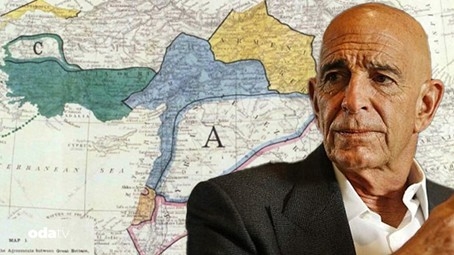
Öncelikle Osmanlı yalnızca askerî genişleme ile açıklanamaz. Uzun süre ayakta kalmasını sağlayan şey bir yönetim modeline sahip olmasıydı. Bu modelin beş temel ayağı vardır. Birincisi; merkezî egemenliktir. Devletin merkezinde elbette ki padişah bulunuyordu; ancak Osmanlı; mutlak kişisel yönetim değil, bürokratik merkezileşme üreten bir sistemdi. Divan, sadrazamlık, kalemiye, ilmiye ve askerî yapı, devlet kapasitesi üretiyordu. Güç kişide değil, kurumsal akışta yoğunlaşıyordu. İkincisi ise, Tom Barrack’ın vurgu yaptığı millet sistemidir. Osmanlı’daki millet sistemi bugünkü ulusal kimlik anlayışı değildi. Toplum; dinî topluluklar üzerinden örgütleniyor, belirli alanlarda yerel, idari ve sosyal özerklik tanınıyordu ama egemenlik merkezde kalıyordu. Üçüncüsü eyalet sistemidir. Osmanlı taşrayı tamamen tek merkezden yönetmedi. Yerel yönetici sınıfları sisteme entegre etti. Merkez yönü belirledi, yerel yapı da bunu uyguladı. Dördüncüsü; tımar sistemidir. Burada da toprak yalnızca arazi değil; gelir, askerî kapasite ve devlet sürekliliği üreten bir mekanizmaydı. Beşincisi ise, meşruiyet üretimidir. Osmanlı bu bağlamda yalnızca güç kullanmadı. Kendisini düzen kurucu olarak sundu bu elbette ki askerî başarının bir sonucuydu. Ama temelde Osmanlı’nın kalıcılığı yalnızca fetih değil; sistem kurabilmesindeydi.
Öncelikle burada sorulması gereken soru şudur: Bu model hangi güç mantığını üretiyordu? Osmanlı modeli tarihsel olarak üç şey üretti: merkezî kapasite, ekonomik dolaşım ve meşruiyet. Şimdi stratejik analiz tam olarak burada başlıyor. Modelin adı değil; güç üretme yöntemi önemlidir. Modern çağda strateji artık savaşmak değildir, siyasi hedeflerin gerçekleştirilmesidir. Artık denklem değişmiştir. Eski modelde fetih, toprak, entegrasyon, vergi, ordu, güç ve süreklilik ekseninde yürüyen mekanizmanın artık günümüzde anlamı kalmamıştır. Yeni model: bilgi, sermaye, ağ, etki ve güç ekseninde dönüşmüştür. Bugünün artık temel sorusu; ‘’Kaç kilometre büyüdün?’’ değil, ‘’Kaç sistemi birbirine bağlayabiliyorsun?’’ sorusudur.
Öncelikle bir devletin büyümesi ile bir devletin toprak genişletmesi aynı şey değildir. Modern stratejide büyüme çoğu zaman etki alanı, ekonomik merkezîlik, kurumsal çekim gücü ve diplomatik ağırlık anlamına gelir. Şimdi Tom Barrack’ın önerdiği modele yeniden baktığımızda öncelikle burada bir devlete sunulan herhangi bir modelin üç şekilde karşılanabileceğini ifade edelim:
- Reddetmek.
- Olduğu gibi kabul etmek.
- Kabul edip yeniden tanımlamak.
Burada en yüksek stratejik seviye üçüncüsüdür. Bir aktör tarafından ortaya atılan bir model, onu önerenin amaçlarından bağımsız olarak bambaşka bir sonuca dönüştürülebilir. Bazen en güçlü hamle, öneriyi reddetmek değil; kabul edip içeriğini değiştirerek yeniden üretmektir. Sun Tzu; en büyük zaferin düşmanın mantığını ele geçirmek olduğunu söyler. Eğer bir güç sana bir yönetim modeli, ekonomik yönelim veya siyasi çerçeve öneriyorsa; asıl analiz edilmesi gereken önerinin yüzeyi değil, arkasındaki güç mantığıdır.
Buradan modern strateji teorisine geçtiğimizde ise, önemli bir dönüşüm ortaya çıktığını görüyoruz. Toprak artık tek başına güç üretemez. Bu nedenle 21. yüzyılda “genişleme” kavramı da dönüşmüştür. Yani biz eğer tarihsel imparatorluk mantığını bugüne taşımak istiyorsak almamız gereken tek şey merkezîlik olmalıdır. Halford Mackinder’in kara hâkimiyeti teorisinin temel varsayımı şuydu; Merkez bölgeleri kontrol eden güç, çevreyi etkiler. Bugünün versiyonunda bu fiziksel işgal değil; lojistik koridorlar, enerji hatları, limanlar, veri merkezleri ve finans ağlarıdır. Türkiye gibi bir ülke açısından tarihsel etki alanı düşüncesi uygulanacaksa bu; askerî genişleme üzerinden değil, Doğu–Batı ticaret ekseni, enerji merkezi, sanayi kümelenmesi ve bölgesel diplomasi üzerinden kurulmalıdır. Görünmeyen genişleme bağlamında Alfred Mahan çok önemli bir şey söyler: Denizi kontrol eden her zaman kıyıyı işgal etmez. Bazen sadece ticareti yönlendirir. Bir ülke; bankalarıyla, şirketleriyle, üniversiteleriyle, lojistik şirketleriyle, başka coğrafyalarda etkili olabilir. Bu, harita değiştirmeden alan genişletmektir. Bu bağlamda Joseph Nye’ın “soft power” yaklaşımı eski imparatorluklardan farklı bir güç tanımlar. İnsanların sana zorla değil, isteyerek yönelmesidir. Bu ise, modern gücün en ileri biçimlerinden biridir. Ancak 21. yüzyılda etki üretmek artık yalnızca kültürel çekicilik meselesi değildir; bilgiyi, bağlantıları, standartları ve geleceğin altyapılarını şekillendirebilme kapasitesidir.
Sonuç olarak; tarihsel Osmanlı referansını modern bir devlet açısından okumanın yolu, sınırları genişletmekten değil; etki alanı oluşturmak, kurumsal kapasite üretmek, ekonomik ve teknolojik ağlar kurmak, uluslararası standartların oluşumunda rol almak ve diğer aktörlerin ne ölçüde sizin oluşturduğunuz sistemler içinde hareket ettiğini belirleyebilme kapasitesinden geçmektedir. Çünkü strateji artık harita çizmek değil; başkalarının haritalarında vazgeçilmez hâle gelmektir.
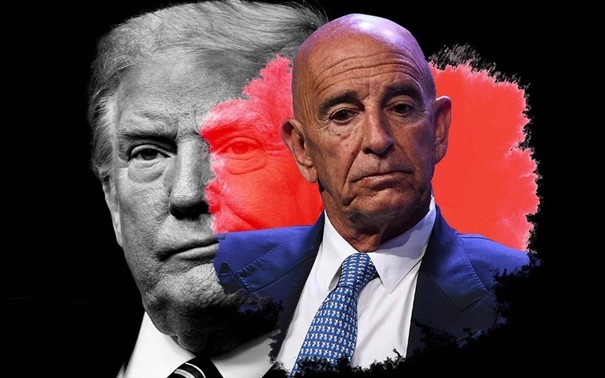
Turning the Opponent's Strategy Backwards: The Tom Barrack Controversy, the Ottoman Model, and 21st-Century State Strategy
Recently, Tom Barrack's assessments of the Ottoman system have drawn renewed attention not only to historical references but also to discussions on the state model, governance capacity, and political stability. Barrack's publicly prominent statements have revolved less around a direct call for a return to the Ottoman system and more around his evaluation of the Ottoman millet system as a historical organizational model capable of holding diverse religious and social groups together within the same centralized structure for an extended period. Within this framework, he has made positive references to the "Ottoman millet system" in the context of Turkey; he has also argued that Western-style democratic models in the Middle East do not produce the same results in every country, and that in some regions, strong central leadership and high state capacity provide greater stability. While these statements have been interpreted differently in various political circles, the crucial debate is not so much about directly transferring a specific historical model to the present day, but rather how historical state experiences should be analyzed and reinterpreted within contemporary conditions from the perspective of modern strategy and governance theories. However, this requires a correct understanding of what the Ottoman state model was. First and foremost, the Ottoman Empire cannot be explained solely by military expansion. What ensured its long-term survival was its possession of a governance model. This model has five fundamental pillars. First, central sovereignty. The Sultan was, of course, at the center of the state; however, the Ottoman system was not one of absolute personal rule, but rather one that produced bureaucratic centralization. The Divan (council), the Grand Vizierate, the scribes, the scholarly class, and the military structure generated state capacity. Power was concentrated not in the individual, but in the institutional flow. Second, as emphasized by Tom Barrack, is the millet system. The millet system in the Ottoman Empire was not the same as today's understanding of national identity. Society was organized through religious communities, and local, administrative, and social autonomy was granted in certain areas, but sovereignty remained centralized. Third, there is the provincial system. The Ottomans did not govern the provinces entirely from a single center. They integrated local ruling classes into the system. The center determined the direction, and the local structure implemented it. Fourth, there is the timar system. Here, land was not merely territory; it was a mechanism that generated income, military capacity, and the continuity of the state. Fifth, there is the production of legitimacy. In this context, the Ottomans did not only use force. They presented themselves as order-makers, which was, of course, a result of military success. But fundamentally, the Ottoman Empire's lasting legacy lay not just in conquests, but in its ability to establish a system.
The first question to be asked here is: What kind of power logic did this model produce? Historically, the Ottoman model produced three things: centralized capacity, economic circulation, and legitimacy. Now, strategic analysis begins precisely here. It's not the name of the model that matters; it's the method of generating power. In the modern age, strategy is no longer about waging war, but about achieving political goals. The equation has changed. The mechanism that operated on the axes of conquest, territory, integration, taxation, army, power, and continuity in the old model no longer has meaning today. The new model has transformed on the axes of information, capital, networks, influence, and power. Today's fundamental question is no longer, "How many kilometers have you grown?" but, "How many systems can you connect?"
First of all, the growth of a state is not the same as the territorial expansion of a state. In modern strategy, growth often means sphere of influence, economic centralization, institutional gravitational pull, and diplomatic weight. Now, when we look again at the model proposed by Tom Barrack, let's first state that any model offered to a state can be met in three ways:
1. Reject it.
2. Accept it as is.
3. Accepting and Redefining.
Here, the highest strategic level is the third. A model proposed by an actor can be transformed into a completely different outcome, regardless of the intentions of the one proposing it. Sometimes the most powerful move is not to reject the proposal, but to accept it and recreate it by changing its content. Sun Tzu says that the greatest victory is to capture the enemy's logic. If a power proposes a model of governance, economic orientation, or political framework, what should be analyzed is not the surface of the proposal, but the logic of the power behind it. When we move from here to modern strategy theory, we see a significant transformation. Land alone can no longer generate power. Therefore, the concept of "expansion" has also transformed in the 21st century. So, if we want to carry the historical imperial logic into the present day, the only thing we need to adopt is centralization. Halford Mackinder's theory of land dominance was based on the assumption that the power controlling the central regions influences the periphery. In today's version, this is not physical occupation; it is logistical corridors, energy lines, ports, data centers, and financial networks. If the idea of historical sphere of influence is to be applied to a country like Turkey, this is... It should be built not through military expansion, but through the East-West trade axis, energy hubs, industrial clusters, and regional diplomacy. In the context of invisible expansion, Alfred Mahan makes a crucial point: He who controls the sea does not always occupy the coast. Sometimes he only directs trade. A country can exert influence in other geographies through its banks, companies, universities, and logistics companies. This is expanding territory without changing the map. In this context, Joseph Nye's "soft power" approach defines a different kind of power than that of ancient empires. It is when people are drawn to you willingly, not by force. This is one of the most advanced forms of modern power. However, in the 21st century, generating influence is no longer just a matter of cultural appeal; it is the capacity to shape knowledge, connections, standards, and the infrastructure of the future. In conclusion, the way to read the historical Ottoman reference from the perspective of a modern state is not through expanding borders, but through creating spheres of influence, generating institutional capacity, establishing economic and technological networks, playing a role in the formation of international standards, and determining the extent to which other actors operate within the systems you have created. Because strategy is no longer about drawing maps; it is about becoming indispensable on the maps of others.

Yazarın Diğer Yazıları
- Rusya Almanya'yı Vuracak mı? Belarus'tan Berline'e Bir Savaş Senaryosu
- Türkiye Ebu Zuhur’a mı, yoksa başka bir noktaya mı üs kuracak?
- Türkiye sınır ötesi harekata mı hazırlanıyor?
- Bir Hareket Ne Zaman Suç Üreten Bir Yapıya Dönüşür?
- 2026 Ortadoğu’sunda aslan kim geyik kim?
- Ortadoğu’daki bu görünmez el kimin?
- Mekke Anlaşması: Üç Devlet Birbirine Neden Güvensin?
- Toplumsal Çevreleme Doktrini: İspanya
Yorumlar
- Alp Demir
Güzel bir tanımlama. Katılıyorum. Ancak maalesef bu gün Türkiye'de hala nüfus sayısı ve toprak ile büyüyebileceğini düşünenlerin sayısı çok fazla. Hala sürüler edinme ve onları gütme gibi ortaçağda kalmış zihniyetler devam ediyor. Aynı dine sahip sürüler. Elbette Osmanlının en büyük dayanağı din idi. Bu gün artık bunun geçersiz olduğunu idrak edemiyorlar. Elindeki gelişmiş insan kapasitesini batı ülkelerine kaptırıp, yerine müslüman koyunlar toplamakla büyüyeceğini zan edenlerle bu iş olmuyor. Ciddi bir zihniyet sorunumuz var ve bunu aşamıyoruz. Nüfus demek su ve doğal kaynak tüketimi demektir. Türkiye'nin büyük bir su sorunu var. İklim değişikliği ile yakında su fakiri olacağız. Güney ve Güney Doğu sınırlarımızın ötesi çöl. İran susuzluktan kırılıyor. Keza Irak ve Suriye de öyle. Suriye'nin yarısından fazlası zaten çöldür. İsrail savaşlarının amaçlarından biri de su kaynaklarına çökmek. Gelecekte su kimin elinde ise çekim merkezi orası olacak. Ne toprak ne nüfus, su ve doğal kaynaklar. Bunları elinizde tutabilmek için de özellikle bizim coğrafyamızda askeri gücünüzün yüksek olması gerekiyor. Bizim suyumuz ve doğal kaynaklarımız kendimize yetmezken, daha fazla nüfus ve çöl toprağı talep etmek ahmaklık, ya da daha ileri gideceğim, intihar demek değilse nedir ?