
Büyük ekonomik kırılma: Para sistemi değişiyor!

Bir şeyler oluyor. Hürmüz Boğazı üzerindeki riskler, enerji hatlarındaki kırılganlık ve finansal piyasalardaki alışılmadık hareketler, bu olanların sıradan şeyler olmadığını gösteriyor. Bazı sinyaller, küresel sistemin bir dönüşüm sürecine girdiğini gösteriyor. Bu bağlamda; küresel sistemin dönüşümünü anlamak için yalnızca güncel gelişmelere bakmak yeterli değildir; bu gelişmeleri tarihsel döngüler ve akademik teoriler ışığında okumak gerekir. Çünkü savaşlar, krizler ve parasal düzen değişimleri çoğu zaman rastlantısal değil, belirli yapısal kırılmaların bir sonucudur. Bunun ilk referans noktası, Birinci Dünya Savaşı ve İkinci Dünya Savaşı sonrası kurulan ekonomik sistemlerdir. Özellikle Bretton Woods Anlaşması, yalnızca teknik bir finansal düzenleme değil; aynı zamanda dönemin hegemon gücünün (ABD) küresel sistemi organize etme kapasitesinin bir sonucuydu. Bu durum, uluslararası ilişkiler literatüründe “hegemonik istikrar teorisi” ile açıklanır.
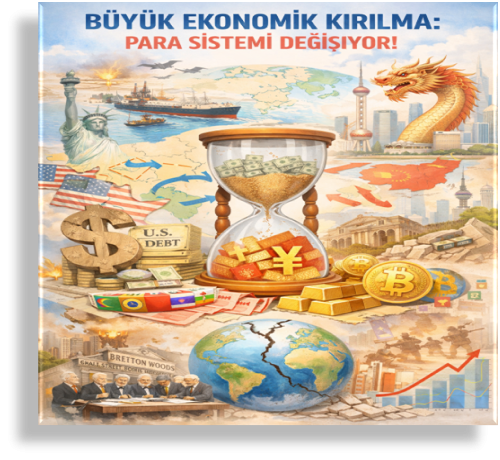
Hegemonik istikrar teorisine göre küresel ekonomik düzen, baskın bir gücün liderliğinde istikrar kazanır. Bu güç, ticaret yollarını güvence altına alır, rezerv para sağlar ve kriz anlarında sistemin devamlılığını temin eder. Ancak hegemon gücün ekonomik ve siyasi kapasitesi zayıflamaya başladığında sistemde çatlaklar oluşur. Bugün ABD dolarının küresel rezerv para olarak hâkimiyetinin sorgulanması, bu teorik çerçevede bir “hegemonik geçiş” sürecine işaret eder. Bu noktada Çin’in yükselişi kritik bir değişken olarak ortaya çıkar. Dünya-sistemleri teorisinin kurucusu Immanuel Wallerstein’a göre küresel ekonomi, merkez, yarı-çevre ve çevre ülkelerden oluşan dinamik bir yapıdır. Tarihsel süreçte ekonomik güç merkezleri yer değiştirir ve bu geçişler çoğu zaman krizler ve çatışmalarla hızlanır. Çin’in üretim gücü, ticaret hacmi ve finansal kapasitesi, onu mevcut sistemin “yarı-çevresinden” merkeze doğru taşıyan bir aktör haline getirmiştir.
Ancak bu geçiş, lineer ve sorunsuz değildir. Tam tersine, enerji hatları, ticaret yolları ve finansal sistemler üzerinde yoğunlaşan gerilimlerle şekillenir. Bu bağlamda Hürmüz Boğazı gibi kritik geçiş noktaları yalnızca coğrafi değil, aynı zamanda sistemik düğüm noktalarıdır. Dünya petrol ticaretinin önemli bir kısmının bu dar boğazdan geçmesi, onu küresel ekonomik düzenin kırılgan bir bileşeni haline getirir. Enerji-jeopolitiği literatürü, özellikle 1973 Petrol Krizi sonrasında gelişmiş ve enerjinin yalnızca ekonomik bir meta değil, aynı zamanda stratejik bir güç aracı olduğunu ortaya koymuştur. Bu kriz, petrodolar sisteminin doğmasına yol açmış ve enerji ile dolar arasında yapısal bir bağ kurmuştur. Bugün bu bağın zayıflaması ya da çeşitlenmesi, mevcut parasal düzenin çözülmeye başladığına dair önemli bir göstergedir.
Finansal açıdan bakıldığında ise “rezerv para paradoksu” olarak bilinen ‘’Triffin ikilemi’’ yeniden gündeme gelmektedir. Bu teoriye göre bir ülkenin para biriminin küresel rezerv para olabilmesi için sürekli dış açık vermesi gerekir. Ancak bu durum uzun vadede o para birimine olan güveni aşındırır. ABD ekonomisinin artan borç yükü ve bütçe açıkları, doların bu yapısal çelişkiyle karşı karşıya olduğunu göstermektedir. Bu teorik çerçeve içerisinde Çin’in elinde bulundurduğu ABD Hazine Tahvilleri meselesi ayrı bir önem taşır. Çin’in bu varlıkları ani biçimde elden çıkarması, küresel finansal sistemde ciddi bir şok yaratabilir. Ancak karşılıklı bağımlılık teorisi (complex interdependence) bu tür hamlelerin neden sınırlı kaldığını açıklar. Küresel ekonomi o kadar iç içe geçmiştir ki, bir aktörün agresif hamlesi çoğu zaman kendisine de zarar verir. Bu nedenle Çin’in stratejisi ani kopuş değil, kademeli yeniden dengeleme şeklinde ilerlemektedir.
Bugün finansal piyasalarda gözlenen bir diğer önemli olgu, geleneksel güvenli liman davranışlarının zayıflamasıdır. Altın ve doların bazı dönemlerde eş zamanlı baskı altında kalabilmesi, piyasa aktörlerinin risk algısında yapısal bir değişim yaşandığını düşündürmektedir. Bu durum, davranışsal finans perspektifinden bakıldığında, beklenti rejiminin değiştiğine işaret eder. Tüm bu teorik yaklaşımlar bir araya getirildiğinde ortaya çıkan tablo şudur: Küresel sistem bir “hegemonik geçiş”, “enerji-temelli jeopolitik rekabet” ve “parasal dönüşüm” süreçlerinin kesişim noktasında bulunmaktadır. Sonuç olarak, İran gerilimi, Hürmüz Boğazı üzerindeki riskler, Çin’in rezerv stratejisi ve finansal piyasalardaki anomali gibi görünen gelişmeler, aslında birbirinden bağımsız değildir. Bunlar, küresel sistemin yapısal dönüşümünün farklı tezahürleridir. Eğer tarihsel ve teorik çerçeve doğru okunursa, bugün yaşananlar bir “krizler toplamı” değil; yeni bir parasal düzenin oluşum sürecidir. Ve bu süreç, geçmişte olduğu gibi muhtemelen sancılı, çok katmanlı ve uzun soluklu olacaktır.
THE GREAT ECONOMIC BREAKDOWN: THE MONETARY SYSTEM IS CHANGING!
Something is happening. Risks over the Strait of Hormuz, fragility in energy pipelines, and unusual movements in financial markets indicate that these are not ordinary events. Some signals suggest that the global system is undergoing a transformation. In this context, understanding the transformation of the global system requires more than just looking at current developments; it is necessary to interpret these developments in light of historical cycles and academic theories. Because wars, crises, and changes in monetary order are often not accidental, but the result of specific structural breaks. The first point of reference for this is the economic systems established after the First and Second World Wars. The Bretton Woods Agreement, in particular, was not merely a technical financial arrangement; it was also a result of the hegemonic power's (the US) capacity to organize the global system. This situation is explained in the international relations literature by the "hegemonic stability theory." According to the hegemonic stability theory, the global economic order gains stability under the leadership of a dominant power. This power secures trade routes, provides reserve currency, and ensures the continuity of the system in times of crisis. However, cracks appear in the system when the economic and political capacity of the hegemonic power begins to weaken. Today, the questioning of the US dollar's dominance as the global reserve currency points to a "hegemonic transition" process within this theoretical framework. At this point, China's rise emerges as a critical variable. According to Immanuel Wallerstein, the founder of world-systems theory, the global economy is a dynamic structure composed of core, semi-periphery, and periphery countries. Throughout history, centers of economic power shift, and these transitions are often accelerated by crises and conflicts. China's production power, trade volume, and financial capacity have made it an actor moving from the "semi-periphery" to the center of the existing system. However, this transition is not linear and smooth. On the contrary, it is shaped by tensions concentrated on energy lines, trade routes, and financial systems. In this context, critical transit points such as the Strait of Hormuz are not only geographical but also systemic nodal points. The fact that a significant portion of the world's oil trade passes through this bottleneck makes it a fragile component of the global economic order. The energy-geopolitics literature, particularly after the 1973 Oil Crisis, has developed and revealed that energy is not only an economic commodity but also a strategic tool of power. This crisis led to the birth of the petrodollar system and established a structural link between energy and the dollar. Today, the weakening or diversification of this link is a significant indicator that the current monetary order is beginning to unravel. From a financial perspective, the Triffin dilemma, known as the "reserve currency paradox," is re-emerging. According to this theory, a country's currency must consistently run external deficits to be a global reserve currency. However, this erodes confidence in that currency in the long run. The increasing debt burden and budget deficits of the US economy demonstrate that the dollar is facing this structural contradiction. Within this theoretical framework, the issue of US Treasury bonds held by China is of particular importance. A sudden divestment of these assets by China could create a serious shock in the global financial system. However, the theory of complex interdependence explains why such moves remain limited. The global economy is so interconnected that an aggressive move by one actor often harms that actor as well. Therefore, China's strategy is not one of sudden breakaway, but rather a gradual rebalancing. Another important phenomenon observed in financial markets today is the weakening of traditional safe-haven behavior. The fact that gold and the dollar can be under simultaneous pressure at certain times suggests a structural change in the risk perception of market actors. From a behavioral finance perspective, this indicates a change in the expectation regime. When all these theoretical approaches are brought together, the picture that emerges is this: The global system is at the intersection of "hegemonic transition," "energy-based geopolitical competition," and "monetary transformation" processes. Consequently, tensions with Iran, risks over the Strait of Hormuz, China's reserve strategy, and seemingly anomalous developments in financial markets are not actually independent of each other. These are different manifestations of the structural transformation of the global system. If the historical and theoretical framework is read correctly, what is happening today is not a "sum of crises"; it is the process of the formation of a new monetary order. And this process, as in the past, will likely be painful, multifaceted, and long-lasting.

Yazarın Diğer Yazıları
- Rusya Almanya'yı Vuracak mı? Belarus'tan Berline'e Bir Savaş Senaryosu
- Türkiye Ebu Zuhur’a mı, yoksa başka bir noktaya mı üs kuracak?
- Türkiye sınır ötesi harekata mı hazırlanıyor?
- Bir Hareket Ne Zaman Suç Üreten Bir Yapıya Dönüşür?
- 2026 Ortadoğu’sunda aslan kim geyik kim?
- Ortadoğu’daki bu görünmez el kimin?
- Mekke Anlaşması: Üç Devlet Birbirine Neden Güvensin?
- Toplumsal Çevreleme Doktrini: İspanya